How Mortgage Rates Affect Monthly Payments in Utah
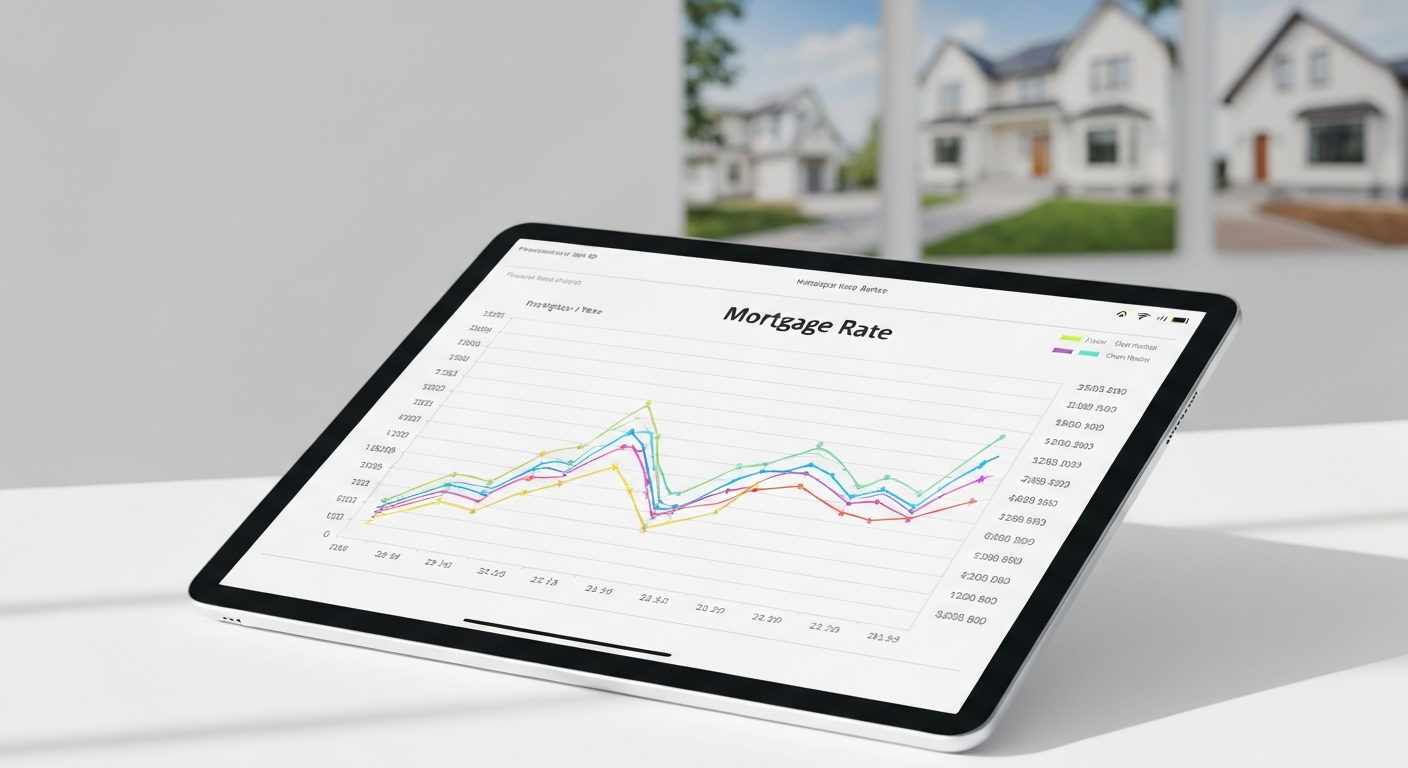
Utah mortgage rates directly dictate your monthly payment and overall buying power. A seemingly small half-percent increase in interest rates can add hundreds to your monthly payment and decrease the amount of home you can afford by roughly 5%.
Key Takeaways
- Interest Rates significantly impact your total monthly housing cost and long-term interest paid.
- The 10% Rule: A 1% change in mortgage rates affects your buying power by approximately 10%.
- Credit Scores are the most effective way to secure a lower interest rate on your mortgage.
- Refinancing later is an option if rates drop, but you should buy based on what you can afford today.
Table of Contents
The Math: How Rates Change Your Payment
To understand the impact, let's look at a real-world example using a $450,000 loan amount on a 30-year fixed mortgage (excluding taxes and insurance).
- At 5.5%, the principal and interest payment is $2,555/month.
- At 6.5%, the payment jumps to $2,844/month.
- At 7.5%, the payment climbs to $3,146/month.
As you can see, a 1% increase in the rate adds nearly $300 to your monthly mortgage payment. You can run these scenarios yourself using our interactive Utah mortgage calculator.
The 10% Rule of Buying Power
Because lenders qualify you based on your Debt-to-Income (DTI) ratio, your monthly payment dictates how much house you can buy.
For every 1% increase in mortgage rates, your purchasing power decreases by approximately 10%. If you qualified for a $500,000 home at 6%, you might only qualify for a $450,000 home at 7%, assuming your income stays exactly the same.
Long-Term Impact: Total Interest Paid
Rates don't just affect your monthly cash flow; they dictate the total cost of the home over 30 years. Using the same $450,000 loan example:
- At 5.5%, you will pay roughly $470,000 in total interest over 30 years.
- At 6.5%, you will pay roughly $573,000 in total interest.
That 1% difference costs over $100,000 over the life of the loan!
Strategies to Lower Your Utah Mortgage Rate
While you can't control the Federal Reserve or the bond market, you can take steps to secure the lowest possible rate:
- Boost Your Credit Score: Borrowers with scores of 740+ get the best rates. Pay down credit card balances before applying.
- Increase Your Down Payment: Putting more skin in the game lowers the lender's risk, often resulting in a better rate.
- Consider a Buydown: If you are buying new construction in Lehi or St. George, builders often offer a 2-1 mortgage buydown, which artificially lowers your rate for the first two years.
- Pay Discount Points: You can pay an upfront fee at closing to permanently buy down your interest rate.
When Does It Make Sense to Refinance?
"Date the rate, marry the house" is a popular phrase in real estate. If you buy a home when rates are high, you always have the option to refinance when they drop.
A general rule of thumb is that if you can drop your rate by 0.75% to 1.0%, refinancing makes financial sense. You can calculate your exact "break-even point" (how long it takes to recoup the closing costs) using our Utah refinance calculator.
Conclusion: Navigating Mortgage Rates
While you can't control the broader market, understanding how mortgage rates affect your monthly payments empowers you to make smarter financial decisions. By improving your credit score, saving for a larger down payment, and working with a local Utah mortgage expert, you can secure the best possible rate for your home purchase.
Frequently Asked Questions
What are current Utah mortgage rates?
Mortgage rates change daily based on the bond market. While they hover around the national average, local Utah lenders can sometimes offer slight discounts. Contact us for today's exact rate quote.
Does an FHA loan have lower rates than a Conventional loan?
Usually, yes. The base interest rate on an FHA loan is typically lower than a Conventional loan. However, FHA loans require permanent mortgage insurance (MIP), which increases the overall Annual Percentage Rate (APR).
Should I lock my mortgage rate today?
If you are within 30 to 45 days of closing and you are comfortable with the monthly payment, it is generally wise to lock your rate to protect against market volatility.
Talk With a Utah Mortgage Expert
Don't let rate anxiety keep you from finding your dream home. Our team monitors the bond market daily to ensure our clients get the absolute best pricing available in Utah.
About the Author: Utah Mortgage Team
The Utah Mortgage Team consists of local lending experts dedicated to helping Utahns navigate the complex world of real estate financing. With decades of combined experience across Salt Lake City, Utah County, and Southern Utah markets, our goal is to provide transparent, actionable advice to home buyers and homeowners.